
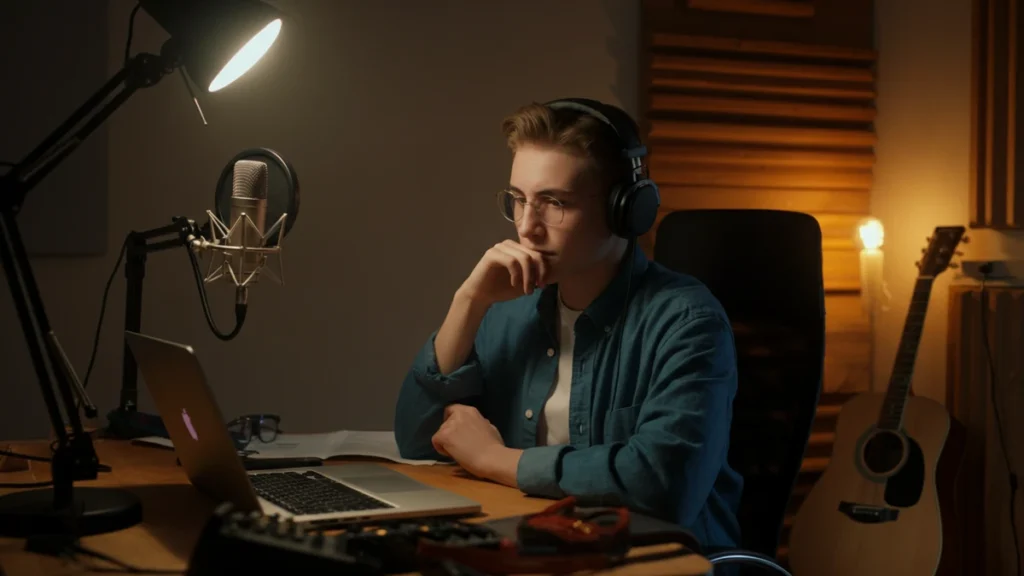
A young musician sits at a desk in a home recording studio with a laptop, microphone, and headphones. | PopHits.co - AI Generated
The Indie Artist’s Dilemma: Art vs. The Algorithm
The modern music landscape presents a stark paradox for independent artists. On one hand, digital distribution has democratized access, allowing anyone to upload their music to global platforms like Spotify and Apple Music. On the other, the economics of streaming have created a challenging environment where billions of streams can translate into shockingly low earnings. This has left many creators feeling like they’re on a treadmill, constantly chasing algorithmic favor and viral moments on platforms like TikTok just to stay afloat. The focus shifts from crafting meaningful art to engineering content that performs well within a specific, often restrictive, digital framework. For many, this model feels unsustainable and creatively unfulfilling.
In response to this growing frustration, a different model has gained significant traction: direct fan funding. At the forefront of this movement is Patreon, a platform that allows fans, or “patrons,” to subscribe to their favorite creators with a recurring monthly payment. This isn’t just a digital tip jar; it’s a fundamental restructuring of the artist-fan relationship. By creating a direct line of financial support, the Patreon for musicians model bypasses the intermediaries and complex royalty systems that dominate the industry. This article explores what Patreon actually does well for artists, moving beyond the simple promise of getting paid to analyze its impact on income stability, community building, and creative autonomy.
Beyond the Tip Jar: Predictable Income in an Unpredictable Industry
The single most powerful advantage of the Patreon for musicians model is the introduction of predictable, recurring revenue. In an industry defined by the volatility of tour schedules, album release cycles, and fluctuating streaming numbers, a steady monthly income is a game-changer. This financial bedrock allows artists to budget, plan long-term projects, and invest in their careers with a degree of confidence that is nearly impossible to achieve through streaming alone.
Unlike the per-stream payouts from a service like Spotify, which can vary wildly based on listener location, subscription type, and labyrinthine label agreements, Patreon offers clarity. An artist knows that if they have 500 patrons paying an average of $5 per month, they have a baseline of $2,500 in gross revenue to work with. This stability provides a crucial creative runway. It means an artist can afford to take time off from touring to write a new album, hire a collaborator, or upgrade their studio equipment without facing a complete financial cliff. It transforms the precarious existence of an indie musician into a more sustainable and professionalized career path, enabling them to focus more on their art and less on their immediate financial survival.
Building a True Community, Not Just a Fanbase
While financial stability is the foundation, the true magic of Patreon lies in its ability to foster genuine community. Social media platforms like Instagram and TikTok are designed for broad, often superficial, engagement—a numbers game of likes, shares, and followers. Patreon operates on a different axis entirely, prioritizing depth over breadth.
The platform provides a suite of tools designed to facilitate meaningful interaction between artists and their most dedicated supporters. Through tiered membership levels, musicians can offer a range of exclusive benefits, such as:
- Early access to new songs and music videos
- Behind-the-scenes content like demos, tutorials, and vlogs
- Exclusive merchandise
- Direct access to the artist through Q&A sessions or a private community server on Discord
This model reframes the relationship from a one-to-many broadcast to a collaborative partnership. Fans are no longer passive consumers; they become active patrons invested in the artist’s journey. They get a firsthand look at the creative process, offer feedback, and feel a sense of ownership and belonging. For the artist, this creates an invaluable feedback loop and a supportive inner circle that is insulated from the fickle trends of the wider internet. It’s the difference between having a million casual listeners and having a thousand true fans who are emotionally and financially invested in your success.
Case Studies: Who Is Making Patreon Work?
The theory behind Patreon for musicians is compelling, but its effectiveness is best illustrated through real-world examples. A diverse range of artists have successfully integrated the platform into their careers.
Perhaps the most well-known evangelist for this model is Amanda Palmer. A pioneer in direct-to-fan connection long before Patreon existed, her philosophy, detailed in her book The Art of Asking, is built on a foundation of vulnerability and trust. Her Patreon is a sprawling ecosystem of art, music, and personal essays, where she shares her work and life with a deeply engaged community that funds her ambitious projects without the need for a traditional record label.
Another prominent example is the indie-pop duo Pomplamoose. Known for their clever video covers and original songs on YouTube, Nataly Dawn and Jack Conte (who is also the CEO of Patreon) have built a sustainable career by being radically transparent about the finances of being a professional musician. They use their public platforms to attract an audience and then invite their most dedicated fans to their Patreon, which funds their recordings, videos, and touring expenses. They prove that a band can thrive in the digital age by directly serving a loyal fanbase.
The model isn’t limited to DIY indie acts. Jacob Collier, a five-time Grammy-winning multi-instrumentalist, uses his Patreon to connect with his most musically curious fans. He offers detailed breakdowns of his complex harmonies, behind-the-scenes looks at his productions, and access to exclusive musical sketches. Similarly, Grammy-winner Kimbra has used the platform to workshop new material and fund creative projects, giving her patrons an intimate view of her artistic evolution. These examples show that Patreon can scale to accommodate artists at various stages of their careers, providing a valuable tool for both emerging creators and established names.
The Freedom to Experiment and Escape the Algorithm
One of the most profound benefits of a successful Patreon is creative liberation. When an artist’s livelihood is not solely dependent on generating massive streaming numbers or landing on a high-traffic playlist, they are freed from the immense pressure to conform to commercial trends. The need to create a 15-second, hook-driven clip for TikTok or to sand the edges off a song to make it more palatable for algorithmic curation diminishes.
This freedom allows artists to pursue their true vision, no matter how niche or unconventional. A musician can create a 20-minute ambient piece, a concept album about medieval history, or a series of experimental soundscapes, knowing that the audience funding them has already opted in. They are paying for the artist’s authentic voice, not a market-tested product. As publications like Pitchfork and Rolling Stone have noted, this shift could be a vital antidote to the growing homogenization of popular music. By providing a safe harbor for experimentation, the Patreon for musicians model helps ensure that the musical ecosystem remains diverse, vibrant, and artist-driven.
Is Patreon the Right Model for Every Artist?
Despite its many strengths, Patreon is not a silver bullet for every musician. It’s crucial to approach the platform with a clear understanding of what it demands. Success on Patreon is not passive income; it requires consistent work. Artists must be willing and able to regularly create exclusive content and actively manage their community. It is, in essence, another job on top of writing, recording, and performing music.
Furthermore, Patreon is primarily a retention and monetization tool, not a discovery platform. It works best for artists who have already cultivated an engaged following elsewhere, whether on YouTube, Instagram, or through live shows. The platform provides the infrastructure to convert existing fans into paying patrons, but it won’t build an audience from scratch.
Artists should also consider alternatives that might better suit their goals. Bandcamp offers robust direct-to-fan sales for digital and physical goods, along with its own subscription service, Bandcamp Pro. For artists focused on funding a single, large-scale project like an album or a tour, a time-bound crowdfunding campaign on a site like Kickstarter might be more appropriate. The right choice depends entirely on the artist’s specific needs, workflow, and relationship with their audience.
While Patreon helps solidify the financial relationship, artists also need tools to grow their listener base. Exploring a guide to Feature.fm for indie artists reveals how other platforms help musicians market their work directly.
Stay Ahead of Music Industry Trends
The rise of platforms like Patreon is just one part of the rapidly evolving music industry. To stay informed on the latest technologies, business models, and market shifts shaping the future of music, explore more insights and analysis at PopHits.co.
About The Author