On 6 October, a federal judge in Manhattan sentenced Michael Smith to 18 months in prison for a scheme that used thousands of bot accounts to stream hundreds of thousands of AI-generated songs. The next day, the US Copyright Office published a notice of inquiry into music streaming fraud, asking the whole industry ten sets of questions about how fake plays work, who pays for them and what should be done about them. The notice had been signed two days earlier, on 5 October, but the two events landed together and sent the same message.
For independent artists, the inquiry matters more than its dry title suggests. Streaming fraud does not only enrich the people running bot farms; it shrinks the royalty pool that pays everyone else, and it can catch honest artists who buy the wrong promotion service. Comments are open until 23 November, and anyone with relevant experience can submit one. Here is what the Office is asking, what it already knows, and what it means for people releasing their own music.
What the Copyright Office Is Asking
The notice of inquiry, Docket No. 2026-6, responds to a letter sent on 21 May by Representative Scott Fitzgerald of the House Judiciary Committee to Register of Copyrights Shira Perlmutter. The letter asked the Office to “examine the prevalence of streaming fraud across digital platforms and how it may be affecting the music industry as a whole.” Fitzgerald’s concern was partly about artificial intelligence. “When AI-generated outputs compete against human-made works, they divert money from a finite royalty pool that would otherwise be distributed,” he said, as quoted by Music Business Worldwide.
The ten subjects of inquiry are broad. The Office wants to know how streaming fraud is executed and how common specific schemes are, which industry policies might be contributing to it, what data exists on its economic impact, and how it relates to AI-generated music and to royalties. It asks about live music too, including whether fraud distorts venue selection, ticket sales and merchandise. It then turns to solutions: how platforms, distributors and rights owners fight fraud today, whether a shared database of known fraud would help, whether metadata standards or labelling could, what voluntary, statutory or regulatory fixes are possible, and how criminal enforcement could improve.
Written comments go through regulations.gov, with instructions on the Office’s music streaming fraud policy page. According to the Office’s NewsNet announcement, initial comments must be received by 11:59pm Eastern on 23 November, and reply comments by 21 December.
How the Office Defines the Problem
The notice adopts a working definition from the Music Fights Fraud Alliance: streaming fraud is “the illegitimate practice of using deceptive, inappropriate, or unpermitted methods to artificially increase the number of streams a song or album receives.” It names the main methods as bot farms, click farms, playlist stuffing and account hijacking, and notes that these activities “are frequently accomplished by unethical marketing companies.”
It also describes a second category it calls copyright fraud: claiming someone else’s work as your own, or uploading manipulated versions of other people’s recordings, practices sometimes known as “carbon copying” or “ghost tracking”. That matters for independent artists, whose songs can be copied, sped up or slowed down, and re-uploaded under another name.
The harms go beyond lost royalties. The notice lists distorted placement on playlists and in recommendation algorithms, corrupted data that artists and venues use to decide “when and where to tour”, and a reduced chance that listeners discover “talented, lesser-known artists”. For a self-releasing musician, every one of those is a practical problem, not an abstract one.
The Money at Stake
The reason fraud pays is the way streaming money is shared. Most services put a percentage of revenue into a royalty pool and divide it according to share of plays, a pro-rata system. Every fake play takes a slice of a fixed pie. The notice cites the RIAA’s figure of $9.5 billion in US recorded-music streaming revenue for 2025, 82% of the US total, and IFPI’s figure of more than $22 billion globally.
AI has made the scale problem worse. Music Business Worldwide reports that Deezer found “up to 85% of the streams generated by fully AI-generated tracks” on its platform in 2025 were fraudulent, and that by mid-2026 more than half of its daily uploads were fully AI-generated, close to 90,000 tracks a day. The congressional letter was careful to say that “there is nothing inherently wrong with using AI as a creative tool in music development”, but that generative AI can help criminals scale fraud, because fraud grows with the number of songs a scheme can spread its fake plays across.
What Platforms and Distributors Already Do
The notice gives a useful summary of existing countermeasures. Streaming services run internal checks on listening time, user locations and the relationship between plays, saves and follows. Apple Music doubled its penalties for fraudulent streaming in February 2026, with fines now starting at 10% and capped at 50%. The notice also cites a report that Spotify charges distributors a $10 fee per track with detected fraudulent streams.
Distributors have added identity checks, “know your customer” procedures and trust and safety teams, and many contracts now let them issue warnings, close accounts or impose penalties. The weak point is movement: some scammers keep going by “bouncing from distributor to distributor”, which led one distributor chief to propose a worldwide database of people found abusing the system. The Music Fights Fraud Alliance, launched in 2023, exists to coordinate exactly that kind of response, and in September IFPI launched a Streaming Integrity Initiative built on five commitments, from customer checks and content vetting to intelligence sharing.
Some in the industry argue the fix is structural: replace the pro-rata pool with an artist-centric or user-centric model, so that a fan’s subscription pays only for what that fan plays. The notice mentions those proposals without endorsing them.
Why Independent Artists Should Pay Attention
Most independent artists will never run a bot farm. The more realistic risk is buying promotion that turns out to be fraudulent. Services that promise playlist placements or guaranteed streams can deliver plays from bots or click farms, and the artist who paid for them can end up with fines, takedowns or a distributor closing the account. Spotify’s own policy warns against paid third-party services that guarantee streams, and the notice notes that fraud is often carried out by “unethical marketing companies”.
The inquiry is also asking whether some industry practices “may be inadvertently contributing to streaming fraud.” That is an open invitation for artists to describe what has happened to them: promotion services that misled them, penalties they could not appeal, or copies of their music they found uploaded under other names. Detailed, factual accounts are exactly the kind of evidence the Office says it wants, alongside its own research.
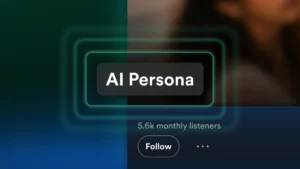
PopHits.co has followed how platforms are reshaping what gets recommended, including how Spotify’s AI persona badge keeps flagged artists out of recommendations. The streaming-fraud inquiry is part of the same shift: platforms, rights owners and now regulators are all deciding which plays count, and independent artists have a direct stake in how those rules are written.
The Case That Set the Tone
The Smith case is the clearest example of what the inquiry is trying to prevent. According to the notice, the North Carolina musician created thousands of bot accounts and used them to stream hundreds of thousands of AI-generated songs, collecting royalties that prosecutors alleged at roughly $10 million. He pleaded guilty in March to conspiracy to commit wire fraud. On 6 October, Judge John G. Koeltl sentenced him to 18 months and ordered him to forfeit $8,091,843.64, Music Business Worldwide reported.
IFPI welcomed the result. “This result sends a clear message that streaming fraud is a crime and has serious consequences,” it said. The notice also points to cases abroad, including a Danish man sentenced for inflating stream counts and a Swedish report describing criminal networks using false streams to launder money, which is why the ninth question asks specifically about organised crime.
How to Take Part
Anyone can respond, and responses do not need to cover all ten questions. An independent artist could answer only the questions where they have direct experience, such as which promotion practices they have seen cause problems, or how a distributor’s penalty process worked for them. Comments should be factual, specific and, where possible, backed by data such as screenshots of stream anomalies or correspondence with a distributor.
The key dates are simple. Initial comments are due by 23 November and replies by 21 December, both at 11:59pm Eastern, through regulations.gov. The Office will combine the responses with its own research to help Congress understand the problem and the options. Whether that leads to legislation is a question for next year. For now, the inquiry puts two questions formally on the US government’s record: how much streaming fraud is costing the music industry, and who should fix it.
About The Author