
Suno's song-creation page on a laptop
Suno's song-creation page on a laptop
The clause that caught the Italian regulator’s eye is one most users scroll past: a licence over the songs they make, paired with a promise to give up their moral rights as the author. On 6 October, Italy’s competition and consumer authority, the AGCM, opened an inquiry into Suno, the AI music platform, over terms of service it says create a significant imbalance between the company and the people who use it.
The timing is awkward for a company in the middle of a growth story. Days earlier, Suno chief executive Mikey Shulman said the platform had moved “far beyond” the two million subscribers and $300 million in annual revenue it last disclosed. The two announcements describe the same business from opposite ends: one measuring how many people now pay for Suno, the other asking what those people are signing up to.
What Italy’s Authority Is Questioning
The AGCM’s announcement, published as case CV278, says the clauses it is examining may be unfair under article 33 of Italy’s Consumer Code because they create a significant imbalance in the rights and obligations of consumers. It lists several specific concerns. According to the authority, the terms give Suno broad discretion to change the contract, the service and subscription prices unilaterally without a justified reason, and allow it to suspend, disable or delete a user’s account, together with its content, at any time, for any reason and without notice.
The authority also says the terms extend a user’s consent to further conditions that cannot be known when they sign up, and limit Suno’s liability in very broad and generic terms, including in cases of personal injury. On disputes, it says users are pushed into mandatory arbitration administered in the United States, face short deadlines for bringing claims, give up the right to join class actions, and must accept Massachusetts as the exclusive venue for any case.
None of this is a finding yet. The AGCM has opened proceedings, not issued a ruling, and its own description of the clauses is written in the conditional throughout, reflecting that the inquiry has only just begun.
Why Moral Rights Matter to Musicians
The section of the announcement most relevant to musicians deals with copyright. The authority says the licence users must grant to use Suno’s services has an “excessively indeterminate” object, generic and all-encompassing in scope, and that it comes with a waiver of moral rights that it considers contrary to articles 20 and following of Italy’s copyright law, Law 633 of 1941.
Moral rights are different from the economic rights that pay royalties. As Music Week explains, they cover the right to be credited as a work’s creator and to object to the work being altered or misused, and Italian law does not allow them to be signed away. For a songwriter who uses an AI tool as part of a wider creative process, that distinction matters: royalties can be licensed and traded, but the right to be named as the author and to object to distortion of the work stays with the person who made it.
The authority will not decide the case on its own. It says that in the coming weeks it will publish the text of a public consultation on the clauses under investigation. Trade associations representing businesses at national level, chambers of commerce with relevant experience in the sector, and nationally recognised consumer associations will be able to take part, which gives music industry bodies a formal route to weigh in.
Growth Past $300 Million a Year
The inquiry lands on a company that is still growing quickly. Speaking to Bloomberg at its Screentime event, Shulman gave an update without new hard numbers. “The last stats that we released were two million subscribers, $300 million in revenue. We are far beyond that by now, and so there is quite a lot of traction,” he said, as reported by Music Ally.
He also argued that investors have underestimated music as a market. “A lot of people think of music as a small business, and one that they don’t necessarily want to get into,” Shulman said. “And I think we’ve shown the world, actually, that music is a big business.” According to Digital Music News, Suno said in February that it had passed 100 million total users, including two million paying subscribers, and Shulman pointed to “tons and tons of industry professionals” using the platform in their day-to-day workflows alongside casual users making music for fun.
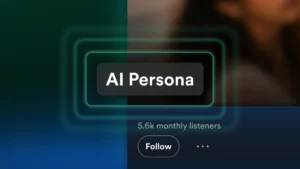
On labelling, Shulman argued that no single party should set the rules for identifying AI music, whether that is an AI platform, a media platform or a group of rightsholders. Music industry bodies see it differently: in July a group of them proposed a labelling scheme with two badges, one for wholly AI-generated tracks and one for AI-assisted tracks, which has not yet been adopted by any streaming service or AI music platform, Music Ally noted. Platforms are already drawing their own lines in the meantime, as PopHits.Co reported when Spotify’s AI persona badge started keeping flagged artists out of recommendations.
A New Speech Tool and a Licensed Rebuild
Suno also shipped a new product in the same week. Speech, launched as a beta at the start of October, generates spoken audio with matching background music in a single track. Product chief Jack Brody said Suno tested it with a small group for a month, and the company pitches it for poems, meditations and bedtime stories, according to The Decoder. Suno has not said how it trained the Speech model, the publication noted, and the beta still has rough edges: Suno itself warned that a British accent can wander off to Australia and back.
The bigger structural change came a month earlier. Digital Music News reports that Suno shelved its existing models in September when it launched its v6 products in partnership with Warner Music Group, BMG and Believe, and that some users pushed back against the changes. Warner settled its litigation with Suno last year and signed a licensing agreement in November, and BMG has since struck its own deal, Music Week reports. Universal Music Group and Sony Music Entertainment are still pursuing legal action in the United States and took further action last month, and in July a German court ruled against Suno in a case brought by the collecting society GEMA.
Five Clauses to Read Before You Upload
For independent artists who use Suno or any similar tool, the Italian inquiry doubles as a checklist. The authority’s concerns map onto five parts of a typical AI platform agreement worth reading before a song made with it goes anywhere near a release.
Price and feature changes. Check whether the company can change what you pay, or what your plan includes, without notice or a stated reason. If your release schedule depends on a feature, assume it can move.
Account suspension and deletion. If an account can be closed at any time with its content, keep your own copies of every stem, project file and final master outside the platform.
The licence you grant. Read what rights you hand the platform over material you create or upload, how long they last and whether they can be transferred. A broad, open-ended licence is the issue the AGCM singled out.
Credit and moral rights. Look for any waiver of the right to be credited or to object to changes to your work, and keep records of your own contribution to every track.
Disputes. Note where any claim would have to be brought, whether arbitration is mandatory, and how long you have to complain. A deadline in a contract you accepted months ago can matter more than the law of the country you live in.
What Happens Next
The next step is the AGCM consultation, which is expected within weeks and will put the contested clauses in front of industry and consumer groups. For Suno, the significance may lie less in Italy as a market than in precedent, since terms rewritten to satisfy one regulator are often applied more widely.
For artists, the two stories of the week point the same way. A platform that has grown past $300 million a year is no longer an experiment on the edge of the industry, and the terms it sets now shape how a large number of creators work. Reading them closely is no longer optional.
About The Author