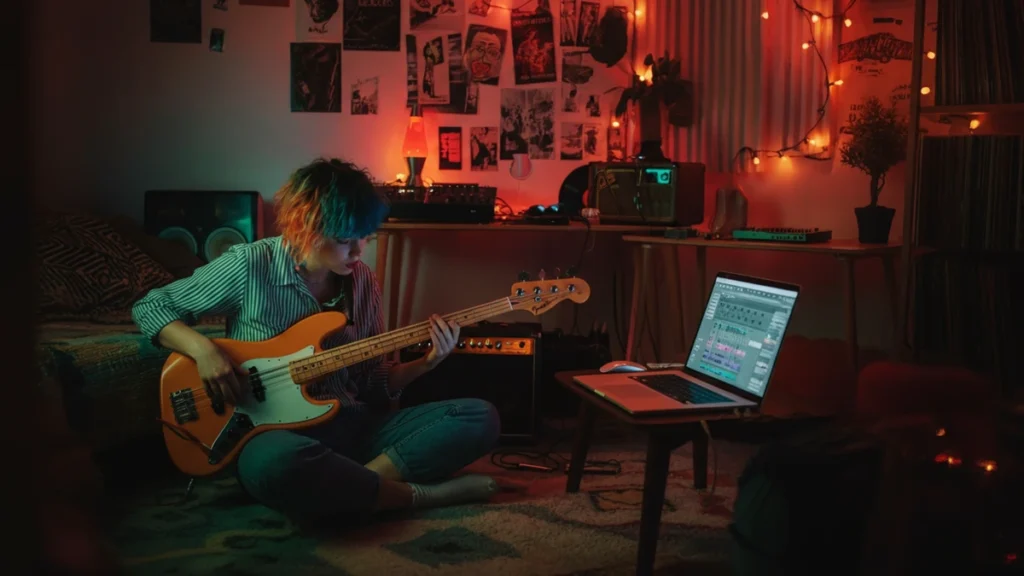
A young musician with colorful hair plays a bass guitar in a vibrant, messy bedroom studio with a laptop and lava lamp. | PopHits.co - AI Generated
Decoding the Kaleidoscopic Sound of Funky Indie-Hip Pop
In today’s algorithm-driven music world, new genres emerge quickly. One vibrant and creative scene is what many call funky indie-hip pop. This genre-bending sound feels perfect for the internet age. It’s quirky, catchy, and individualistic. This is more than just a playlist category. It’s a growing movement with a DIY approach. It features groovy basslines and songwriting that blends funk, indie pop, and hip-hop. Platforms like TikTok and popular streaming playlists have fueled its rise. This sound shows a major shift in how we create, discover, and consume music.
The Architects of the Sound: Who Defines the Genre?
A group of artists leads the funky indie-hip pop movement, embodying its diverse spirit. Remi Wolf perhaps captures this energy best. She has a powerful, soulful voice and maximalist visuals. Her songs instantly shift from hilarious to heart-wrenching, making her a leader for the sound. Her album, Juno, was a breakout success. It masterfully blends psychedelic funk with pop hooks and hip-hop cadences. Publications describe her music as a whirlwind of color and charisma, which perfectly describes the genre.
Sven Gamsky, known as Still Woozy, is another key artist. His style is often more laid-back and lo-fi. He uses woozy synths, intricate guitar lines, and a unique, conversational vocal style. Songs like “Goodie Bag” show his talent for catchy, unusual melodies that are both personal and danceable. His bedroom pop origins are clear. Yet, his strong focus on funk and R&B grooves firmly places him in this hybrid genre.
Remi Wolf and Still Woozy are central figures, but the scene is wide and varied. Artists like Dominic Fike blend alternative rock, rap, and pop effortlessly. Omar Apollo adds soul, funk, and Latin influences to his music. Both share this genre-fluid approach. Other artists, such as Gus Dapperton and Laundry Day, also enrich this sound. They value personality over strict stylistic rules.
Anatomy of a Track: The Core Components
What exactly makes a song fall under the funky indie-hip pop umbrella? It’s less a rigid formula and more a fusion of three distinct musical traditions.
1. The Funk Foundation: The “funky” part is essential. The genre rests on infectious basslines and syncopated, ‘neck-snapping’ rhythms. It might not always directly echo bands like Parliament-Funkadelic or Sly & the Family Stone. However, their influence is clear. The aim is to create a physical, danceable groove, even with lo-fi or hazy production.
2. Indie Pop Sensibilities: This element shows the genre’s core values and production style. Many artists started in bedroom pop, recording with a DIY approach. Their lyrics offer authenticity and vulnerability. They often explore themes of anxiety, love, and identity with a playful or ironic twist. This indie spirit also impacts the business side. Many artists first gained attention on platforms like Bandcamp. Later, some signed with independent labels like Dead Oceans. Others were scouted by major labels like Interscope Records. All these labels sought fresh voices.
3. Hip-Hop’s Rhythmic and Textural Influence: The hip-hop connection appears in several ways. You hear it in the rhythmic vocal delivery. This conversational flow often blurs the line between singing and rapping. It’s also in the drum programming, which frequently uses the crisp snares and deep bass of an 808. Furthermore, the overall production philosophy embraces sampling and collage-like beat construction. This echoes innovative producers like Tyler, the Creator and Anderson.Paak, who have long blended rap, soul, and funk.
The TikTok Effect: How Digital Platforms Fueled a Micro-Genre
We can’t talk about funky indie-hip pop’s rise without mentioning TikTok. The platform’s algorithm and short-form videos have been the ideal incubator for this sound. The genre focuses on immediate, catchy hooks and quirky, memorable moments, making it highly shareable. A 15-second clip of a Remi Wolf chorus can quickly become the soundtrack for thousands of videos. Take her viral hit “Photo ID” as an example. This can launch an artist from niche to noteworthy overnight.
This viral discovery method is crucial for the modern music industry. When a song gets popular on TikTok, it often sees a matching surge on streaming services. Curators at platforms like Spotify and Apple Music notice this. They add the track to influential editorial playlists such as Lorem or Pollen. These playlists act as tastemakers. They introduce the sound to a broader audience and confirm its status as a real trend. Data from industry trackers like Billboard shows this digital ecosystem can greatly affect an artist’s career. It transforms online buzz into actual chart performance.
From DIY Roots to Mainstream Stages
Many funky indie-hip pop artists follow a modern path: from their bedroom to the main stage. Their first DIY recordings, often made with basic equipment, show a raw, honest creativity that connects with listeners. As their audience expands, so do their opportunities. A self-released EP on Bandcamp can lead to a major label deal. This brings bigger production budgets and higher stakes.
This shift is clearest in live performances. These artists now regularly play global festivals. They bring high-energy, personality-driven shows to huge crowds at events like Coachella, Lollapalooza, and Glastonbury. Their success proves a major industry change: a sound from internet subculture can now get mainstream attention. It does so without losing its unique charm. The challenge for these artists is to grow their operations and handle mainstream pressures. They must also keep the authenticity that first made them popular.
This hybrid approach defines the modern music scene. In fact, today’s streaming culture enables this new wave of artist-driven creativity and discovery.
What’s Next for This Genre-Fluid Sound?
Like all internet-driven micro-genres, the future of funky indie-hip pop is both uncertain and exciting. The label itself might fade as its core elements blend into the wider pop scene. Yet, its influence is already clear. Mainstream pop artists are adding more eclectic sounds and quirky lyrical styles to their work. This trend highlights a bigger truth about modern music: genre is more fluid than ever. Artists are no longer stuck in one lane. Listeners, helped by strong discovery algorithms, are keen to follow them anywhere. The legacy of funky indie-hip pop might not be the genre itself. Instead, it’s the spirit of fearless creativity and boundary-pushing it embodies.
Stay on top of music trends with PopHits.co.
Want the latest analysis of music industry trends, streaming wars, and future sound technology? Explore more articles on PopHits.co.
About The Author