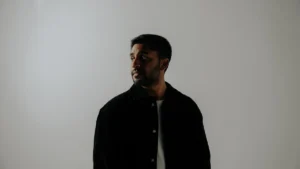
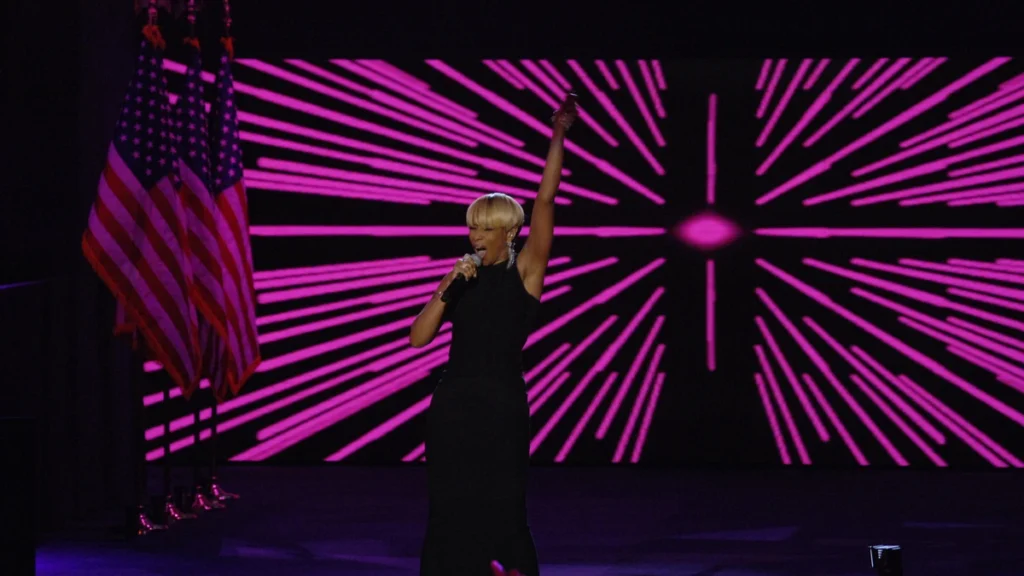
Mary J. Blige performing live
Mary J. Blige performing live
The clip ran for eighty-five seconds and looked like a studio drop-in. A producer sat with Mary J. Blige, opened Suno, and built a song called Pretty Flowers modelled on her sound. She listened, reacted well, and suggested adding strings and a beat. The Mary J. Blige ad went out over a weekend, shorter edits of it multiplied across social feeds, and by Friday the campaign no longer existed.
Suno withdrew it after saying that Blige had never authorised the campaign at all. According to the statement the company gave Variety and reported by Stereogum: “We entered into a business deal with someone who presented themselves as Ms. Blige’s official representative. As soon as we learned this was not the case, and that Ms. Blige was uncomfortable, we terminated the advertising campaign.”
What the Video Actually Showed
The format is worth describing precisely, because the reaction was to the format as much as to the platform. This was not a logo endorsement or a still photograph. It was a working session in which one of the most decorated voices in R&B watched a machine assemble something in her own idiom and offered production notes on it.
The song was called Pretty Flowers. Consequence reported that Blige suggested the addition of strings and a beat, and reacted positively to the result. Edited versions then circulated with progressively less context, which is the normal fate of any promotional video that touches a live argument.
The timing did the rest. The clip landed alongside the rollout of Suno Studio 2.0, the company’s latest set of music-making tools, so it read to viewers as a launch asset rather than a conversation. A well-known artist appearing to bless a generative tool during a product launch is a strong marketing signal, which is precisely why the authorisation question matters more here than it would for a static advert.
The Part Nobody Has Explained
The company has not identified the person who misrepresented themselves, and it has not said how the arrangement reached the point of filming, editing and distribution without anyone in Blige’s actual camp signing off. Those are the operationally interesting questions, and both remain open.
An advertising campaign involving a named artist normally passes through several verifiable checkpoints. Someone signs a contract. Someone books a shoot. Someone approves an edit. Someone clears the artist’s name and likeness for use in a specific territory and format. Each of those is an opportunity to confirm that the person on the other end of the email has the authority they claim, and on this occasion at least one of them did not catch it.
Blige has not released a statement. Her representative declined to comment further. That silence is itself a decision: an artist who was genuinely comfortable with the campaign would have a straightforward way to say so, and the absence of that is the clearest available signal about how the material was received.
Why Verification Is Now a Commercial Control
For anyone working in artist services, the practical lesson is narrower than the general AI argument and more useful. The value being transacted here was not a recording or a composition. It was association: the implied endorsement of a technology by a person whose taste carries weight. That value does not sit in a rights database, so there is no automated way to confirm who is entitled to sell it.
The chain of authority runs artist to manager to business manager to label, and it changes. Artists switch managers. Managers leave agencies. Business affairs contacts move. A representative who was legitimate eighteen months ago may not be one now, and a platform moving at launch pace has an incentive to accept the first credible-looking answer rather than the verified one.
The countermeasure is unglamorous: confirm authority through a channel the artist controls, not the one the deal arrived on, before any money moves or any camera is set up. That is a small amount of friction against a campaign that had to be pulled within days of going live, along with whatever goodwill it consumed.
A Week That Was Already Difficult
The withdrawal did not happen in isolation. Suno’s legal calendar filled up in the same seven days. Four US-based artists filed a proposed class action alleging that the company commercially exploited their identities without consent, a claim Suno denies, saying its platform creates original music and blocks prompts naming specific artists or copyrighted songs.
Then the Canadian collecting society SOCAN filed a straight copyright-infringement action in the Federal Court of Canada. Music Ally reported that the suit accuses Suno of “producing and streaming outputs that replicate human-created musical works without consent or payment”, and that SOCAN followed its German counterpart GEMA in publishing a public page of examples. Works spotlighted include Avril Lavigne’s Sk8er Boi, Tom Cochrane’s Life is a Highway and Alexisonfire’s Passing Out in America, drawn from a sample of 150 outputs listed in the filing.
A Regional Mexican music company has also filed against the platform, and the existing US label litigation continues. None of that is directly connected to the advertisement, but it shapes how the advertisement was read. A company arguing in court that it does not appropriate artist identity is in a poor position to run a campaign in which an artist’s identity turns out not to have been cleared.
The Argument Underneath the Advert
The reason this landed as hard as it did is that the industry has not settled the underlying question, and prominent voices sit on both sides of it. Dr. Dre has recently expressed support for using AI to make music. Thomas Bangalter of Daft Punk has described it as a shortcut capable of stunting the creative process. Neither position is fringe, and neither is going to win by assertion.
Industry observers note that the licensed route exists and is being built. Several AI music companies have been negotiating with rights holders precisely so that artist participation is contractual rather than assumed. That work is slow, unglamorous and largely invisible, and it is the thing that distinguishes a durable business from a campaign that has to be deleted.
What the episode does not settle is whether an artist of Blige’s standing would have agreed had the approach come through the right channel. That question is now unanswerable, because the wrong channel got there first and used up the opportunity. The cost of a bad intermediary is not only the retraction; it is that the legitimate version of the same conversation is now much harder to have.
What Independent Artists Should Take From It
The immediate read for a self-releasing artist is that name and likeness are now separately monetisable in a way that was mostly theoretical five years ago. A platform will pay for association, and the person who controls the answer to “who speaks for this artist” controls that revenue. If that answer is vague in your own setup, it is worth making it precise before somebody else does.
Practically, that means a single named point of contact for commercial approaches, a written record of who is authorised to sign what, and a habit of confirming any inbound offer through a route the artist controls. Those are the same controls that protect royalty registrations, which PopHits covered when digital performance royalties pay artists 45% directly, if they register.
The Mary J. Blige ad is a useful case precisely because nobody in it looks straightforwardly villainous. A platform moved fast during a launch. Someone exploited a gap. An artist ended up in a campaign she had not signed off. The gap was administrative, not technological, and it is the kind that gets closed by process rather than by argument.
About The Author