A 40th anniversary tour with a billion-view hit behind it was cancelled last week, and the stated reason was not weak demand. It was cost. That single line tells you most of what you need to know about touring economics in 2026: audiences are still there, and the arithmetic between a sold ticket and a paid musician has quietly become the hardest part of the job.
For independent artists the question is no longer whether to tour. It is what a tour actually clears once every fee, commission and deduction has been taken out, and whether that number justifies six weeks away from other income.
The Cancellation That Made the Math Public
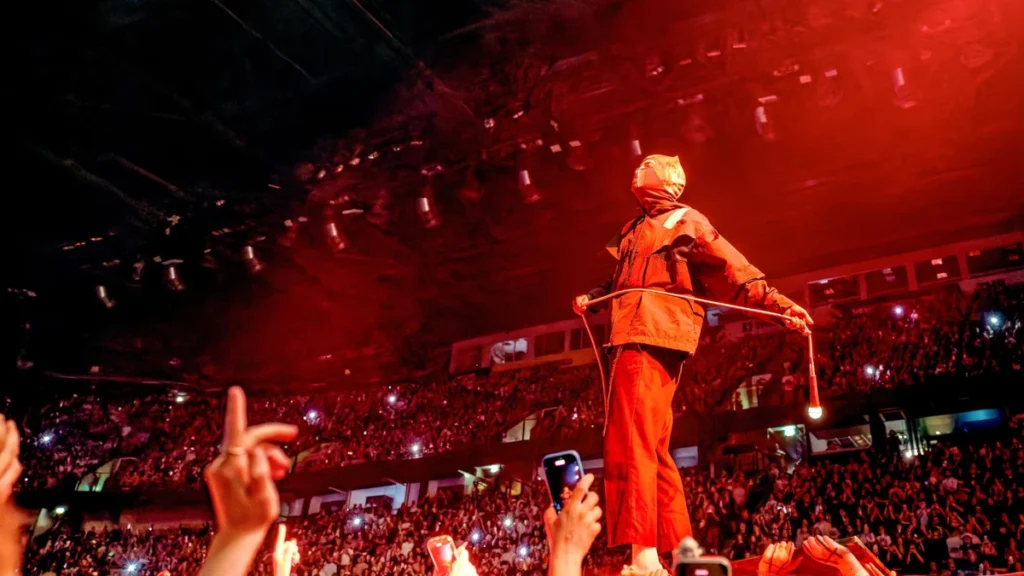
On 25 July, Roxette’s 40th anniversary North American run was called off. Ticketholders were refunded for the amphitheatre dates, which had the Swedish duo headlining a bill with Taylor Dayne and Nick Lowe. The statement posted to the band’s social accounts was unusually direct about the cause: “Due to logistics and hugely increased touring costs, Live Nation US has decided to postpone the Northamerican tour.”
As Variety noted, the timing was pointed. The same week the dates disappeared, the group’s 1990 single “It Must Have Been Love” was confirmed as a member of YouTube’s Billion Views Club. Catalogue demand and touring viability are now two separate questions.
Established acts absorb a cancelled run. Independent artists building a career on the road do not have that cushion, which is why the underlying numbers matter more to them than to anyone else.
What a Headline Tour Actually Clears
The gap between gross and net is wider than most artists expect. A 2026 analysis by music promotion firm Chartlex, drawing on Future of Music Coalition tour reports, NIVA member venue surveys and Bandcamp Daily artist disclosures from 2024 to 2026, walked the full profit-and-loss on three tour scales.
A 12-date headline run in 1,500-capacity rooms grossing roughly $480,000 in ticket and merch revenue typically clears $35,000 to $65,000 net to a four-piece band. That is after agent commission, business manager, tour manager, sound engineer, lighting tech, vehicle, fuel, hotels, per diems, insurance, payroll taxes and venue settlement deductions. Per member, it works out at $8,750 to $16,250 for about six weeks including travel days, before income tax.
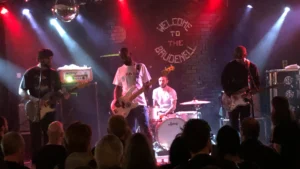
Step down a tier and the picture changes sharply. The same band playing 12 dates in 500-capacity rooms typically clears $4,000 to $12,000 in total, or $1,000 to $3,000 each. A 30-date support slot at a $750 to $1,500 nightly buyout usually loses $5,000 to $15,000 on touring costs alone. You can read the full line-item breakdown here.
Why Merch, Not Tickets, Decides the Outcome
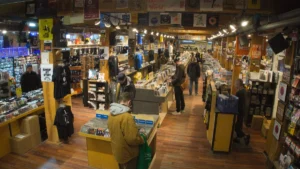
The most useful finding in that analysis is where the profit actually sits. At the 200 to 1,500 capacity level, merch routinely outearns ticket revenue, and a support run that loses money on the road is recouped almost entirely at the merch table.
That reframes the whole planning exercise. The guarantee is a floor, not the outcome. The number that determines whether a tour works is merch-per-head conversion, which depends on design, pricing, stock depth and how the artist talks about the table from stage.
It also changes which deductions matter. Merch usually settles separately from the box office, with venues holding a percentage on soft goods such as apparel and little or nothing on hard goods such as vinyl and CDs. An artist who shifts the mix toward records can keep materially more of the same gross.
The Costs That Moved Fastest
Ask working bands what changed and the answer is rarely one line item. It is all of them at once.
The English group Dry Cleaning postponed a 21-date North American tour in early 2026, having announced it only a month earlier. Their US visas had not arrived months after filing, leaving thousands of dollars in expediting fees on top of an already expensive run. “There were just too many variables starting to stack in a way that made me feel extremely uncomfortable,” their manager Tim Hampson told Rolling Stone.
Vocalist Florence Shaw put the shift plainly: “It was definitely much, much, much more doable just a few years ago. It’s not even about making a profit. It’s about actually being able to do it at all.” Drummer Nick Buxton pointed at the specific inputs: “It’s just the flights, the tour buses, the hotels, even the food, are just exploding at the moment.”
Bassist Lewis Maynard added the detail that unsettles promoters most: the cancellations are not confined to acts with weak sales. “You see lots of bands just canceling tours left, right, and center. And tours that are selling well, which is crazy.”
The Venue Squeeze at the Bottom of the Ladder
Costs are climbing on the other side of the contract too. In the UK, a business rates revaluation taking effect in 2026 reset arena property taxes from 2021 pandemic-era conditions to 2024 trading levels. NME reported that some bills more than doubled, with one major London arena facing a rise of about 300 per cent.
A coalition including Music Venue Trust, LIVE, the National Arenas Association, the Concert Promoters Association, the Musicians’ Union and the Featured Artists Coalition wrote to the then prime minister calling the changes “disproportionate, inappropriate, and unjustified”. Music Venue Trust chief executive Mark Davyd warned the effect would show up in ticket prices and in artists being less willing to route through the UK at all.
Grassroots rooms are the training ground where independent acts learn to hold a crowd. When their economics tighten, the effect on developing artists arrives one or two years later, in the form of fewer viable stops on a map.
The Other Half of the Story
None of this describes an industry without an audience. The Roxette catalogue crossed a billion streams on one video in the same week its tour collapsed. Dry Cleaning’s dates were selling. Buxton’s own summary of the problem contains the encouraging part: “There is demand and there is supply, and the revenue from doing a big tour is significant. It’s a lot of money.”
The constraint is structural, not commercial. Demand converts into revenue and revenue converts into costs faster than it converts into artist income. That is a fixable problem in a way that indifference from audiences would not be, and it is why direct fan revenue has moved to the centre of most independent release plans, a shift we covered in our look at what the superfan economy means for independent artists.
How Artists Are Rewriting the Tour Plan
The practical response to touring economics in 2026 emerging across the independent sector is less romantic and more analytical than the old model of touring everywhere and hoping.
Route on evidence rather than instinct, using streaming and ticketing geography to confirm a real audience in a market before committing to a date. Model the P&L before booking, with the merch line treated as a business in its own right rather than an afterthought. Choose the room that sells out over the room that flatters, because a full 400-capacity show usually nets more than a half-empty 800. Build visa timelines and their costs into the budget from the first conversation, not the final week. And treat a shorter, denser run as a legitimate outcome rather than a failure of ambition.
Touring still works for independent artists in 2026. It simply no longer works by default, and the acts doing it sustainably are the ones who ran the numbers before the tour bus was booked.
This article was AI-assisted and edited for accuracy.
About The Author